
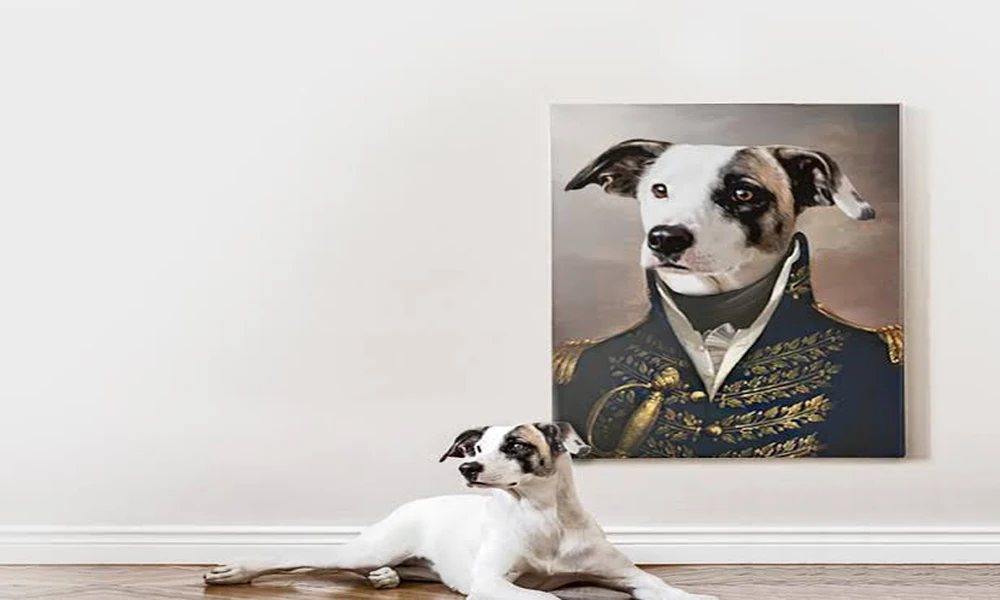
A pet portrait seems like an easy gift when you live far from someone you love. You know the animal matters to them, and you probably have photographs in your messages already. The harder part is everything you cannot see: which image the recipient likes best, what would suit their room, and whether they would enjoy a finished surprise or prefer to help choose it.
You can plan a custom pet portrait from another city without guessing all of those details. Decide how much of the gift should be a surprise, then organize the references and practical choices around that decision. Distance makes a clear plan more useful, not a grander gesture more necessary.
Choose the kind of surprise you can reasonably manage
There are several ways to give a commissioned portrait. You can present finished artwork, reveal the idea and choose it together, or keep the subject a surprise while asking about format and room preferences. None is automatically the more thoughtful option.
A finished surprise works best when you know the recipient’s taste and have a suitable photograph they genuinely like. If you know only that they love their dog, that may not be enough to choose a large, colorful portrait for their living room.
Inviting them into the process can still feel personal. You might say that you would like to arrange a portrait of their pet and would enjoy selecting the photograph together. That gives the recipient a concrete gift idea without requiring them to approve your guesses after the piece exists.
If you choose this route, do not imply that a retailer offers a gift certificate or a particular purchase arrangement unless you have checked. You can make a personal offer to fund the chosen item without describing an unverified store service.
Collect references without confusing the commission
Start with photographs the recipient has already shared with you or agrees to provide. Ask for the original file when possible. A picture downloaded from a social post may be convenient, but it is not necessarily the strongest available version.
Keep one main reference in a clearly labeled folder. Additional photographs should have a purpose, such as showing the darker ear or the chest marking. Do not send a large collection and expect the portrait maker to discover the recipient’s favorite expression.
Respect privacy while gathering images. Ask a family member for help only when sharing the photograph is appropriate. Do not access someone else’s account, private album, or device to preserve a surprise. A straightforward request is preferable to creating discomfort around a gift.
When comparing pet portraits from photos, concentrate on what is visible in the source. You can describe a familiar expression or ask to retain a marking shown in the photograph. Avoid promising that the artwork will recreate details you cannot document.
Confirm practical preferences in an ordinary conversation
You do not need to conduct a formal interview. A recent conversation about decorating, moving, or a favorite photograph may tell you what you need. If it does not, ask directly rather than turning weak clues into certainty.
Find out whether the recipient wants a physical piece and where they might put it. A framed image for a desk presents a different planning problem from a large wall portrait. Do not assume there is room because the person’s home looked spacious in an old photograph.
Ask about their preferred style in plain language. Would they enjoy a playful fictional character, or would they rather keep the focus on the pet’s actual face? The answer is more useful than guessing from a general label such as “modern.”
Browsing custom pet portraits at Pawfolio Art together can help make those preferences concrete. Treat the examples as choices to discuss, not evidence that every size, frame, or customization is available on every product. Check the exact selected item before making a commitment.
Keep one person responsible for the order
Long-distance gifts can become confusing when a sibling supplies photographs, another relative pays, and the recipient sends separate revision requests. Decide who will submit the order and combine the information before checkout.
That person should keep the reference files, selected options, and confirmation together. If several people contribute, ask them to send suggestions before the commission is submitted. A group message is useful for discussion, but it is not a substitute for one clear brief.
Also decide who will review the artwork when a proof is included. If the recipient is participating, let them lead the likeness check. If the gift remains a surprise, choose someone who actually knows the animal rather than distributing the proof to everyone in the family.
Pawfolio Art’s artwork ordering process explains how its portrait workflow is presented. Review the current page and selected product for the applicable steps. Do not assume a proof, delivery estimate, or revision process is identical across unrelated personalized products.
Separate the gift occasion from the delivery promise
Decide whether the artwork must arrive for a particular date or whether the occasion can be the moment you reveal the idea. The second approach gives you more flexibility when the recipient should help select the photograph or style.
If arrival matters, check the current production and delivery information before ordering. Allow time for the actual review process instead of assuming the first proof will require no attention. An estimated arrival is not a guarantee, especially when you have a fixed event in mind.
Confirm the shipping address with the recipient or an appropriate household contact. An old address in your messages may be outdated. If the parcel would create storage difficulties or an unwelcome surprise at work, ask where it should go.
You can send a handwritten or digital note on the occasion itself, explaining the personal reason for the portrait. Keep it honest about the status. Say that you are arranging artwork or awaiting delivery rather than presenting an unfinished commission as a completed gift.
Make the handoff easy for the recipient
Once the gift is ready, provide whatever practical information the recipient needs. That may include the selected format, any relevant care instructions supplied with the product, and order information if assistance is required. Do not invent universal cleaning advice for all portrait materials.
Let them decide when and where to display it. A gift does not create an obligation to hang something immediately or send a staged photograph back to the giver. You can be pleased they received it without turning their response into a performance.
If you chose the artwork together, keep the final image and reference folder organized so the family can find them later. If it was a surprise, explain which real moment guided your photograph choice. That context is usually more useful than a long account of how difficult the ordering process was.
A successful long-distance portrait gift depends on a few clear decisions: how much to reveal, which photograph to use, who manages the commission, and what the recipient actually wants. Settle those, and the distance becomes manageable without making the gift complicated.