
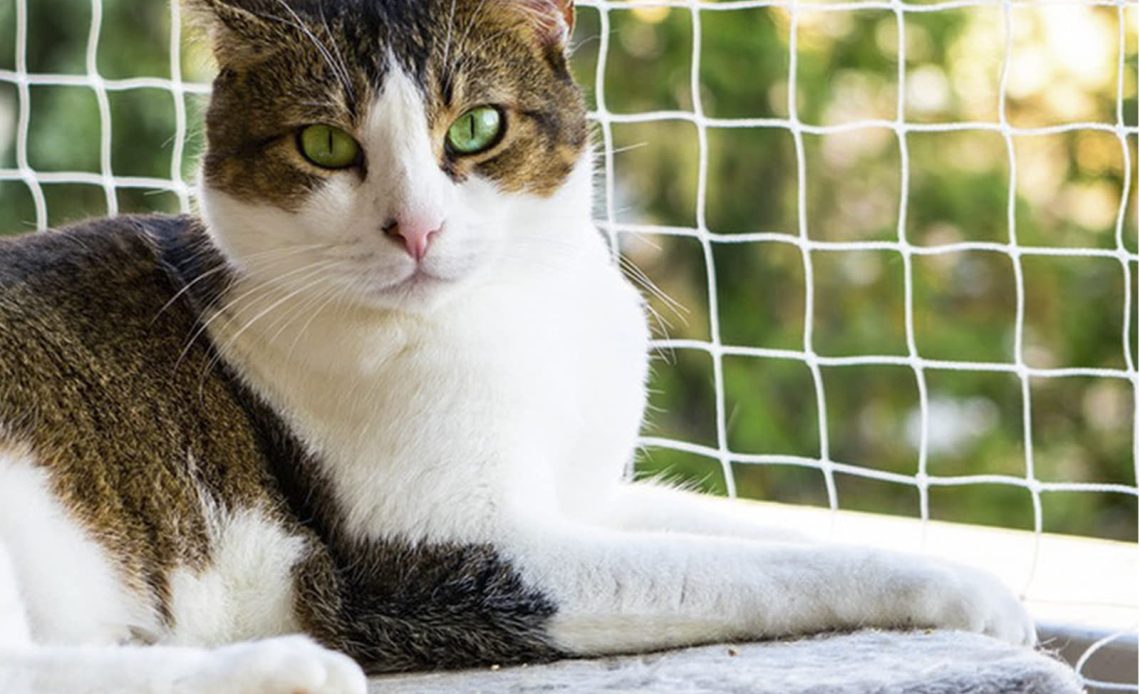
Cats and open windows are a poor combination in a high-rise city. The behaviour that makes cats such good company indoors curiosity, a drive to climb, an instinct to chase anything moving becomes dangerous when the only thing between a cat and a twelve-storey drop is an open frame. Veterinary clinics see the results often enough that the phenomenon has a clinical name. Fitting cat mesh for windows is the single most effective way to remove that risk while keeping a home ventilated.
Why Cats Fall
The common assumption is that cats are too sure-footed to fall, and that belief is exactly what makes owners comfortable leaving windows open. In practice cats misjudge regularly. A bird or insect passing the window triggers a chase response that overrides caution. Sunbathing on a narrow ledge ends in a slip when the cat rolls or stretches. Sudden noises startle a cat into a leap in the wrong direction. Kittens and elderly cats misjudge distances more often. The fall itself is rarely deliberate it is a moment of distraction in a place that offered no margin for error.
What Happens After a Fall
Survival is common, which is part of why the risk is underestimated, but injury usually is not. Typical outcomes include fractured limbs and pelvis, split hard palate, chest trauma and internal bleeding, all requiring emergency surgery. Falls from lower floors can be worse than higher ones, because the cat has less time to orient. Beyond injury, a cat that survives may land outside a secured compound and be lost entirely. Neither outcome is one owners expect when they leave a window open for airflow.
How Screening Removes the Risk
The principle is simple, a barrier that permits air and light while physically preventing a cat from reaching the opening. A properly fitted panel turns a hazardous opening into a usable one, so windows can stay open through the day without supervision. This matters most in a climate where natural ventilation is how most homes stay comfortable the alternative, keeping windows shut and running air conditioning continuously, is expensive and unpleasant.
Materials and Strength
Not all mesh is equivalent, and the difference matters when a cat leans into it. Standard insect screening is designed to stop mosquitoes, not to resist weight, and a determined cat will push through or tear it with claws. Pet-grade materials use heavier gauge wire or reinforced polyester with a much higher tear strength. Stainless steel mesh offers the greatest durability and resists corrosion in humid coastal conditions, though it costs more. Aluminium is cheaper but dents easily. Whatever the material, the fixing method matters equally mesh that is strong but held in a weak frame simply detaches as a unit.
Fixing Methods
Installation approaches vary in permanence and suitability. Fixed frames are screwed or bolted to the window surround, giving the most secure result but requiring drilling. Magnetic and tension-fitted systems clip into place without permanent fixings, which suits rented properties, though they need careful selection to withstand a cat’s weight. Sliding and hinged panels allow access for cleaning and for casement windows that open outward, while a retractable mosquito screen handles doorways where a fixed panel would block passage. A mixture is normal the key is that every reachable opening is covered, since one unscreened window defeats the arrangement.
Working With Different Window Types
Casement windows that swing outward are the most common in local apartments and need screening on the inside of the opening, with a design that still allows the window itself to be operated. Sliding windows can take fixed panels on the fixed half and a matching panel on the sliding half. Top-hung and awning windows create a gap at the base that must be enclosed. Bay windows and full-height glazing need frames sized to the whole opening. Getting these details right is why a site measurement usually produces a better result than an off-the-shelf kit.
Rules and Approvals
Before installing anything on an external face, check what applies to your property. Housing authorities and management corporations often have requirements about external alterations, particularly anything visible from outside or projecting beyond the façade. Internally fitted mesh generally raises fewer issues than external grilles. Tenants should confirm what their tenancy allows regarding fixings into frames and walls. Most screening systems are designed to be discreet and reversible for exactly this reason, but confirming beforehand avoids being asked to remove it later.
Beyond Windows
Windows are the main risk but not the only one. Balconies and service yards present the same hazard and are frequently overlooked, as are doors that get propped open for ventilation. A retractable panel fitted to a balcony or main door provides a barrier that can be drawn across when needed and folded away when not, which suits openings used regularly by people as well as air.
The Secondary Benefit
Screening designed for pets also addresses the reason most households consider mesh in the first place. Mosquitoes, houseflies and other insects are a constant presence, and a barrier that stops a cat also stops them. Choosing from a range of insect netting for windows with pet-grade strength delivers both outcomes from a single installation, which is generally cheaper than treating the two problems separately.
Getting It Right
Cover every opening a cat can reach, choose material rated for animal contact rather than insects alone, and pay as much attention to the frame and fixings as to the mesh itself. Check the installation periodically for loosened fixings or damage from claws. Done properly, it becomes invisible in daily life which is precisely the point.